Across Caribbean education systems, student achievement is often discussed through examination results, curriculum reform, and resource allocation. While these elements matter, they do not tell the full story. What happens inside a school every day, how people relate to one another, how expectations are set, and how safe and supported students feel play a decisive role in learning outcomes. This is where school climate becomes essential.
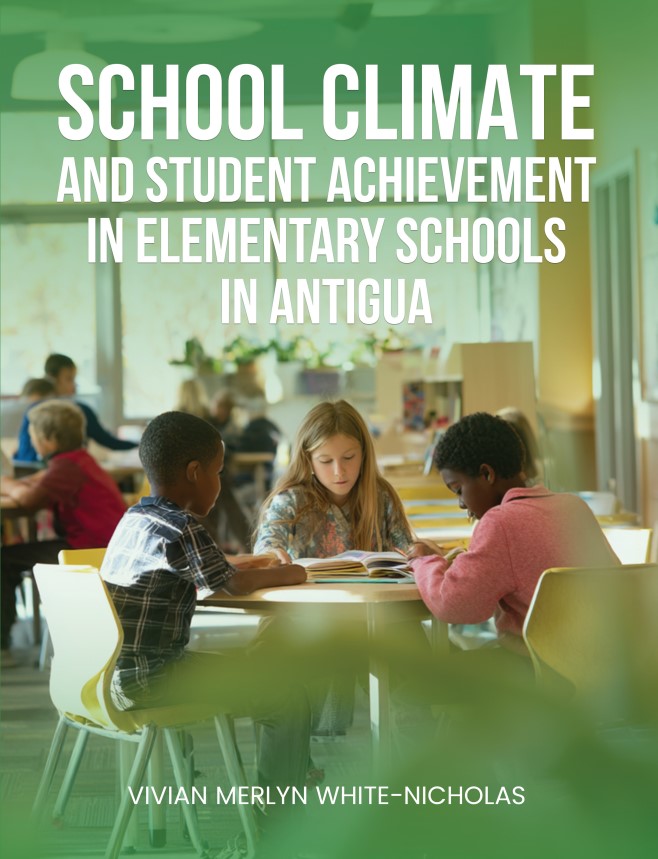
School Climate and Student Achievement in Elementary Schools in Antigua places school climate at the center of the conversation about student achievement in Caribbean schools. Drawing from empirical research in Antigua and wider Caribbean scholarship, it shows that achievement does not improve simply because standards rise or assessments change. It improves when the environment in which students learn supports effort, trust, and consistent academic focus.
Understanding School Climate in Everyday Terms
School climate is not an abstract concept. It is the lived experience of students, teachers, and principals. It includes how students are treated when they struggle, how teachers work together, how leadership responds to challenges, and whether learning is genuinely valued. When climate is positive, students are more willing to try, teachers are more engaged, and principals are better positioned to lead improvement.
In many Caribbean schools, external pressures such as national assessments, parental expectations, and limited resources place strain on school communities. A weak school climate amplifies these pressures, while a healthy climate helps schools respond constructively. This book demonstrates that climate is not a soft variable but a measurable and influential factor in academic performance.
Why Climate Matters Now More Than Before
Caribbean education systems face increasing complexity. Classrooms are more diverse, accountability demands are higher, and teachers are expected to meet ambitious targets with limited support. In this context, school climate becomes a stabilizing force.
Research presented in this book shows that schools with strong institutional integrity, supportive leadership, and clear academic emphasis are better able to sustain achievement over time. Students in these environments understand what is expected of them and believe that success is attainable. Teachers feel respected and supported, which strengthens instructional quality.
Ignoring school climate risks undermines even well-designed reforms. When students experience tension, inconsistency, or low expectations, achievement suffers regardless of curriculum quality. The findings in this book highlight that climate is not separate from achievement. It shapes how achievement is pursued.
Caribbean Context and Local Evidence
One of the strengths of this book is its Caribbean grounding. Much of the existing literature on school climate comes from North America or Europe. While useful, those findings do not always translate directly to Caribbean schools. This research fills that gap by examining school climate within the cultural, social, and administrative realities of Antigua.
The evidence shows that leadership style, teacher relationships, and academic emphasis interact differently in Caribbean contexts. For example, strong leadership does not improve achievement unless it is paired with trust and shared purpose. High expectations only translate into results when teachers feel supported rather than pressured.
Implications for Schools and Policymakers
By concentrating on school climate, educators and governments can go beyond band-aid fixes. It’s not always necessary to make significant financial investments to improve the climate. Relationship awareness, leadership consistency, and academic goal clarity are all necessary.
This book makes the case that meaningful improvement begins within the school environment. When climate improves, achievement follows. This insight is particularly relevant for Caribbean systems seeking sustainable progress rather than short term gains.
Student achievement is not shaped only by what students are taught but by where and how they are taught. School climate brings that reality into focus. This book offers evidence that Caribbean schools cannot afford to treat climate as secondary. It is central to learning, equity, and long term success.
Head to Amazon to purchase your copy: https://www.amazon.com/dp/197161033X/.