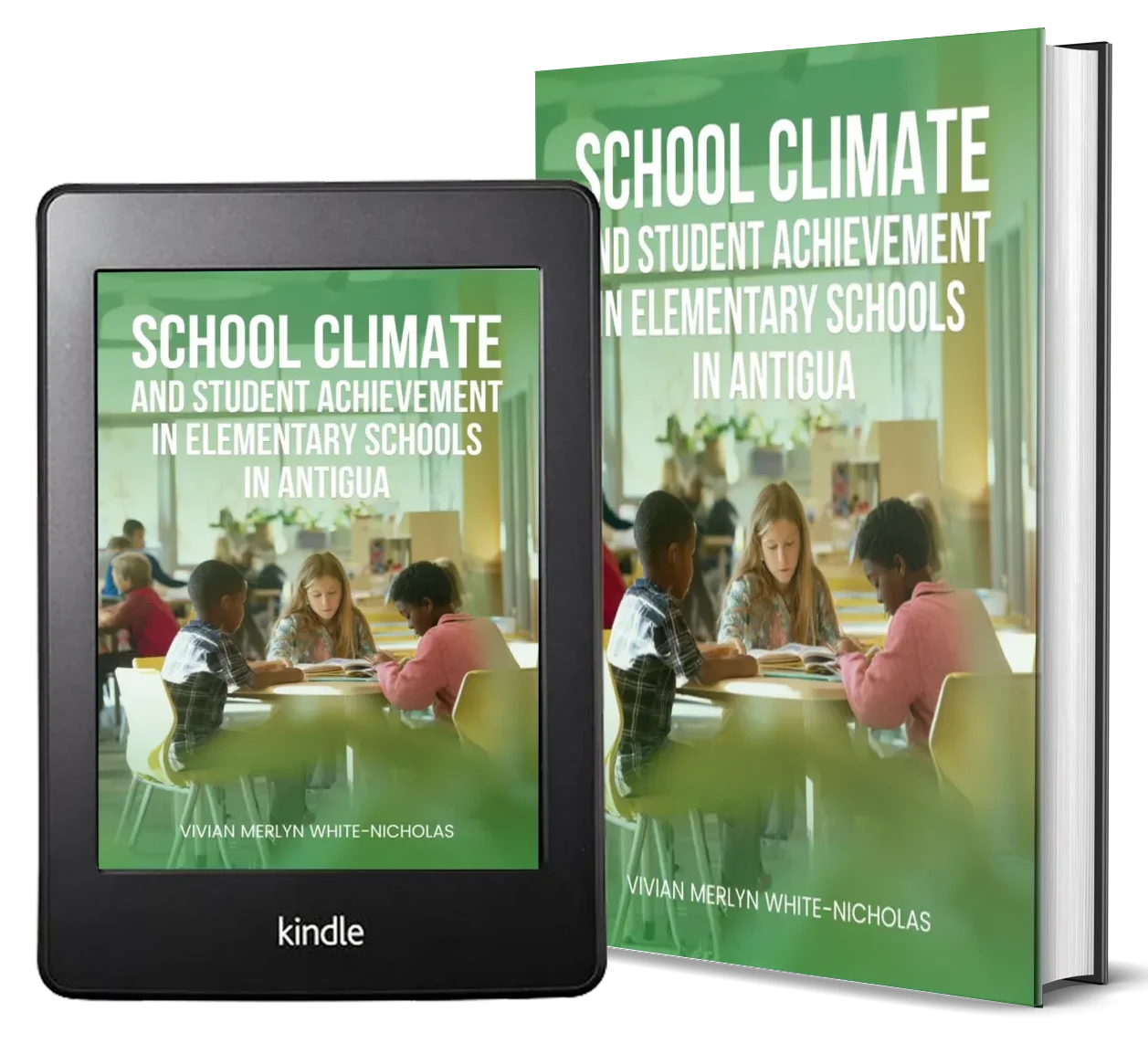
Walk into any thriving school, and one detail becomes clear almost immediately. Teachers are not working in isolation. They communicate, support one another, and move with a shared sense of purpose. This dynamic is not incidental. It is a defining factor in why some students excel while others fall behind. School Climate and Student Achievement in Elementary Schools in Antigua: A Predictive Model by Vivian White-Nicholas highlights how the quality of teacher relationships directly shapes student outcomes in meaningful and lasting ways.
Strong teacher relationships create consistency in the classroom. When educators collaborate, students experience a unified approach to learning. Expectations are clear, standards are reinforced, and confusion is minimized. A student who struggles in one class is supported by strategies that align across subjects. This continuity builds confidence and reduces gaps in understanding.
Equally important is the impact on teacher morale. Teaching is demanding, and without support, even skilled educators can lose motivation. In schools where teachers maintain positive relationships, there is a sense of shared responsibility. Challenges are discussed openly, solutions are developed collectively, and successes are celebrated together. This environment keeps teachers engaged, and engaged teachers bring energy and focus into their classrooms.
Students are highly perceptive. They recognize when teachers respect one another and when they do not. In schools where collaboration is strong, students tend to mirror that behavior. They are more cooperative, more respectful, and more willing to participate. The classroom becomes a space where learning feels structured yet supportive. This balance encourages students to take academic risks and push beyond their comfort zones.
The influence of teacher relationships also extends to instructional quality. When educators share ideas, teaching methods improve. A teacher who discovers an effective approach to explaining a complex concept can pass that knowledge to colleagues. Over time, this exchange raises the overall standard of teaching within the school. Students benefit from refined instruction that is informed by collective experience rather than individual trial and error.
In contrast, schools where teachers operate independently often face fragmented learning environments. Students encounter differing expectations, inconsistent teaching styles, and limited support when difficulties arise. This lack of cohesion can lead to confusion, disengagement, and lower achievement. The absence of collaboration does not just affect teachers. It directly impacts the student experience.
Examples from education systems around the world reinforce this connection. In Finland, teachers regularly engage in joint planning and professional dialogue, which strengthens instructional consistency. In Singapore, structured collaboration among teachers is a central part of school operations, ensuring that knowledge and strategies are shared across the system. These practices demonstrate that strong teacher relationships are not optional. They are essential to sustained student success.
Vivian White-Nicholas brings this concept into clear focus through her work in Antigua. By examining how teacher affiliation contributes to school climate, she reveals that relationships among educators are not merely a workplace dynamic. They are a core driver of academic performance. Her insights show that when teachers feel connected and supported, students are more likely to achieve at higher levels.
For educators and school leaders, the message is straightforward. Improving student outcomes requires attention to the relationships behind the scenes. When teachers work together with trust and purpose, they create an environment where students are not only taught but guided toward success.
Head to Amazon to purchase your copy: https://www.amazon.com/dp/197161033X/.